
Open House Help Desk Public Grievances IPR Act and Rule
Opportunities Annual Reports Tender Dashboard

Blanket Materials and Safety

Blanket Materials and Safety
Overview

The Blanket Materials and Safety Section (BMSS) is mandated to undertake indigenous research and development activities related to structural and functional materials for application in the Breeding Blanket System of nuclear fusion reactors. The section conducts comprehensive R&D programs encompassing advanced materials design, synthesis, processing, characterization, multiphysics simulation, safety analysis, and fabrication technologies.

BMSS at the Institute for Plasma Research (IPR) is actively engaged in both fundamental and applied research associated with fusion reactor materials and enabling technologies. The section is equipped with advanced research facilities dedicated to mechanical testing, powder material synthesis and characterization, thermo-physical characterization, welding engineering, modeling and simulation, and multidisciplinary experimental investigations.

In addition, BMSS focuses on the fabrication and qualification of breeding blanket components using advanced manufacturing methodologies supported by detailed investigations of heat-treatment processes and structure–property relationships under relevant operating conditions. The section also performs safety analyses and experimental studies related to fusion blanket systems.

Core Research and Development Activities

The principal research and development activities undertaken by BMSS are summarized below:

  1. Development of structural materials:
    • Indian Reduced Activation Ferritic Martensitic (IN-RAFM) steel
    • Oxide Dispersion Strengthened (ODS) steels
  2. Development and characterization of functional materials:
    • Lithium titanate powders and pebbles
    • Lithium orthosilicate materials
    • Materials for hydrogen absorption and detection
  3. Development of fabrication technologies:
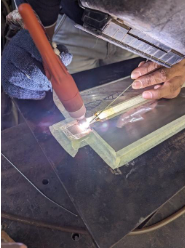
    • Similar and dissimilar metal joining technologies
  4. Fabrication of small-scale and large-scale blanket mock-up systems
  5. Microstructure–mechanical property correlation studies
  6. Corrosion, high-temperature oxidation, and material compatibility investigations
  7. Modeling and simulation for material and component performance prediction
  8. Safety analysis of fusion blanket systems and associated experimental studies
Blanket Materials and Safety
Experiments

1.Development & characterizations of functional materials

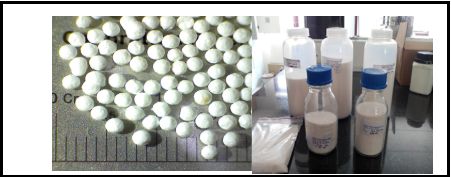
The Institute for Plasma Research has developed indigenous capabilities for manufacturing lithium titanate (Li₂TiO₃) ceramic breeder pebbles for nuclear fusion applications. These breeder materials are essential for tritium generation in future fusion reactors. BMSS laboratories have established scalable synthesis and processing routes, from precursor preparation to engineered pebble fabrication. Advanced solid-state and solution combustion techniques are used to produce ultra-pure nanocrystalline Li₂TiO₃ powders with precise stoichiometric control. Automated drip-casting enables large-scale production with high dimensional uniformity. The indigenous manufacturing route significantly reduces dependence on external supply chains for critical fusion reactor materials.


2.Measurements of effective thermal conductivity of ceramic pebble beds

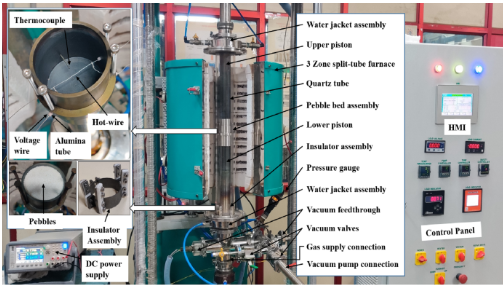
An experimental study was conducted to determine the effective thermal conductivity of lithium titanate ceramic pebble beds under fusion-relevant thermo-mechanical conditions. Measurements were performed under uniaxial compressive stress up to 6 MPa, temperatures up to 800 °C, and helium pressure up to 1 bar. The facility employs the transient hot-wire technique with four-wire resistance measurement for accurate hot-wire temperature determination, eliminating the need for an additional temperature sensor. The hot-wire system exhibited measurement errors below ±1.0%, while uncertainty in effective thermal conductivity measurements remained below 1.5%, demonstrating reliable thermo-physical characterization capability for ceramic breeder materials.


3.Development of IN-RAFM steel and fabrication technologies 

A 9Cr-based Reduced Activation Ferritic Martensitic (RAFM) steel was engineered as a primary structural candidate material for the Indian Breeding Blanket development program. This indigenous alloy, designated IN-RAFM (9Cr–1.5W–0.06Ta), has been successfully synthesized via industrial-scale metallurgical processing, yielding diverse standardized geometries and structural forms. Comprehensive empirical characterization of its thermophysical and mechanical profiles is currently underway, utilizing advanced analytical methodologies to rigorously validate critical performance metrics. Concurrently, sub-scale prototypical mock-up components were manufactured to systematically evaluate the fabrication viability, thermomechanical challenges, and architectural complexities inherent in full-scale breeding blanket integration.


Head Details

Vilas Chudaman  Chaudhari

Vilas Chudaman Chaudhari

Designation
:
Scientific Officer-G
Phone
:

Team Members

Aroh Shrivastava

Aroh Shrivastava

Designation
:
Scientific Officer-F
Phone
:
Chandra Sekhar Sasmal

Chandra Sekhar Sasmal

Designation
:
Scientific Officer-F
Phone
:
Shiju Sam

Shiju Sam

Designation
:
Scientific Officer-E
Phone
:
Maulikkumar M. Panchal

Maulikkumar M. Panchal

Designation
:
Scientific Officer-E
Phone
:
Pedada Prasada Rao

Pedada Prasada Rao

Designation
:
Scientific Officer-E
Phone
:
Hardikkumar M Tailor

Hardikkumar M Tailor

Designation
:
Hardikkumar M Tailor
Phone
:
Swapnil S. Lonare

Swapnil S. Lonare

Designation
:
Scientific Assistant-B
Phone
:
Last Updated: 30-Jun-2026 03:29 PM